 CoolCrazyGames
Flight Games
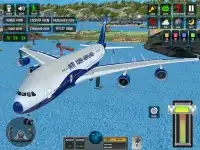
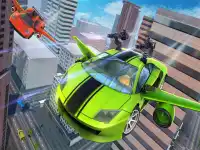
Flight games place the player in control of aircraft or flying vehicles navigating through three-dimensional space. These titles often require managing altitude, speed, and direction to achieve specific goals. The core loop involves traversing environments while maintaining stability against simulated physics. A common starting point for many enthusiasts is airplane games which offer accessible flight mechanics.






















Getting Into Flight games
The player must Steadily operate controls to maintain altitude and speed while navigating through the airspace to reach the objective.
Core Experience
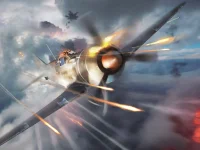
Players manage pitch, roll, and yaw to steer their craft through open skies or structured courses, reacting to wind and momentum changes. The primary objective usually involves reaching waypoints, completing transport missions, or surviving against environmental hazards, demanding constant attention to the craft's status. Successful navigation relies on reading instruments and visual cues to avoid obstacles and maintain efficient flight paths in these flight simulation games and air combat games.
Pro Advice
Focus on smooth inputs rather than sudden movements to conserve fuel and maintain control stability. Instead of chasing every target, prioritize the primary objective to ensure mission success. Practice hovering and gentle turns to master precise positioning required for tight maneuvers. Understanding the physics model is crucial for efficient travel in these pilot games.
Flight Facts
Q: What are the typical controls? A: Controls usually involve pitch, roll, yaw, throttle, and sometimes braking.
Q: What is the main objective? A: The main objective is to navigate from point to point or complete transport tasks.
Q: Is there a specific story? A: Specific stories are not stated, focusing on flight mechanics.
Q: What is the core mechanic? A: The core mechanic is piloting an aircraft through three-dimensional space.