 CoolCrazyGames
Exploring Realistic Spaceflight Simulator Gameplay
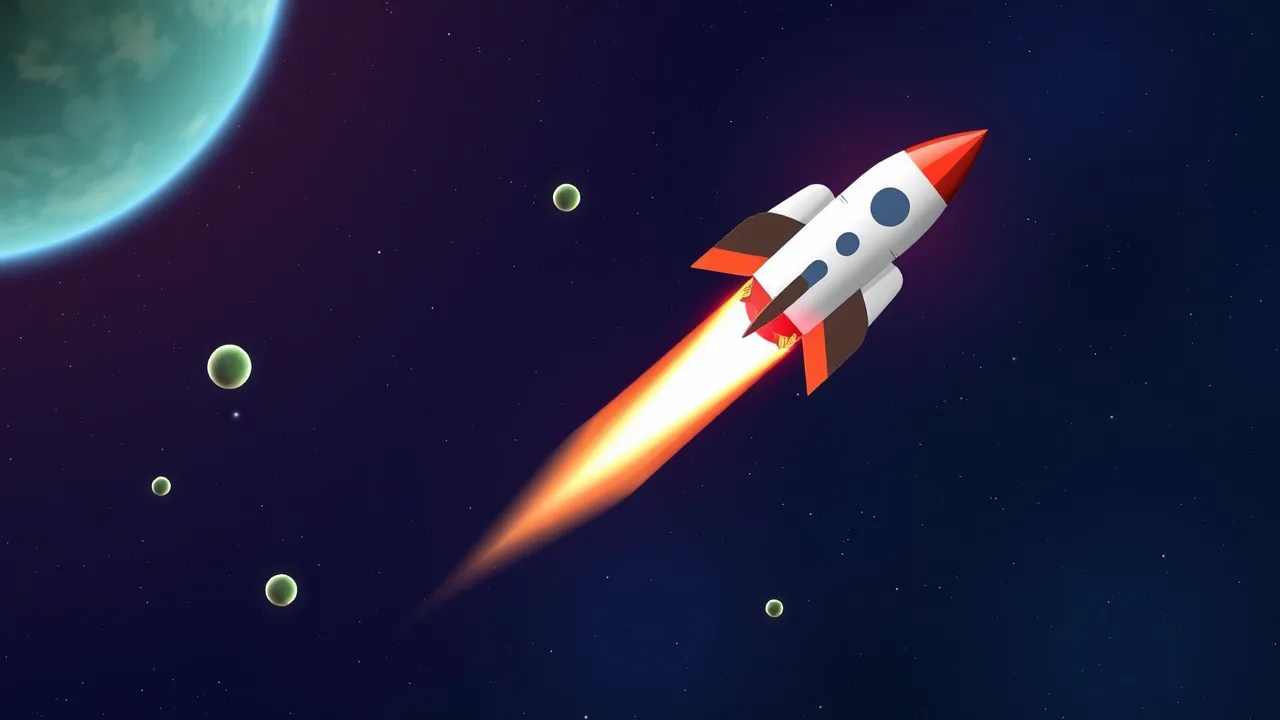
Spaceflight Simulator offers an accessible yet deeply engaging experience where players design, assemble, and pilot their own rockets into the vast cosmos. This hypercasual title blends simple controls with realistic orbital mechanics, making it a perfect pick for anyone curious about space travel. From building your first rocket to executing complex maneuvers, the game delivers a satisfying loop of creation and discovery that keeps players coming back for more.
Spaceflight Simulator fits naturally here because players often want a quick path from reading to playing in the Hypercasual Games category. The title and related keywords already suggest the style and pace, so opening Spaceflight Simulator is a simple way to see whether the gameplay matches that interest.
The core of this simulation lies in its intuitive building system. Players start with a basic set of components, including fuel tanks, engines, command modules, and aerodynamic fins. Each part has specific properties that affect weight, thrust, and stability. The challenge is to balance these elements to create a vessel capable of reaching orbit and beyond. You will learn to stack stages efficiently, ensuring that spent fuel tanks can be jettisoned to reduce mass. The visual feedback is immediate; a poorly designed rocket will wobble or fail to lift off, while a well-engineered one ascends smoothly. This hands-on approach to engineering makes every successful launch feel earned.
Understanding Orbital Dynamics
Unlike many casual games, this simulator introduces players to the fundamental principles of orbital mechanics. You will quickly learn that reaching space is only half the battle; staying there requires achieving a stable orbit. The game visualizes your trajectory with a clear orbital path, showing how gravity influences your rocket's movement. Players must time their burns to circularize their orbit, a critical skill for any aspiring astronaut. The transition from atmospheric flight to the vacuum of space is seamless, and the physics model, while simplified, respects the core concepts of velocity and gravitational pull. This educational aspect adds a layer of depth that is both challenging and rewarding.
Navigating Different Celestial Bodies
The universe of the game is not limited to Earth. Once you have mastered orbital insertion, you can set your sights on the Moon, Mars, and other planets in the solar system. Each destination presents unique challenges due to its gravity well and distance. A trip to the Moon requires careful planning of your transfer orbit and a precise landing burn to avoid crashing. The planets are rendered with distinct visual styles, from the dusty red surface of Mars to the stark craters of the Moon. Exploring these destinations provides a tangible sense of scale and accomplishment, turning abstract space concepts into a personal adventure.
Exploring the Hypercasual Appeal
Despite its realistic underpinnings, the game remains firmly in the hypercasual category. The controls are simple: a few buttons for thrust, rotation, and staging are all you need. This accessibility allows new players to jump in and launch a rocket within seconds. There is no complex UI or overwhelming tutorial; learning happens through experimentation and failure. The short play sessions are perfect for quick gaming breaks, yet the depth of the simulation ensures long-term engagement. This balance between simplicity and complexity is what makes the game so compelling for a wide audience.
Strategies for Successful Interplanetary Travel
Planning is paramount when venturing beyond Earth's orbit. Before launching, players should study the orbital alignment of their target planet. A well-timed launch window can save significant fuel and time. In-game tools help visualize these windows, but it is up to the player to execute the burn at the right moment. Managing fuel reserves is another critical skill; every action in space consumes propellant. Players must learn to be economical with their maneuvers, using gravity assists where possible to slingshot toward their destination. These strategic elements transform the game from a simple shooter into a thoughtful puzzle of physics and timing.
Customization and Creative Freedom
One of the most satisfying aspects of the game is the freedom to experiment with rocket designs. There are no rigid templates; you can create anything from a compact single-stage vehicle to a massive multi-stage interplanetary cruiser. The game encourages creativity by providing a sandbox environment where failure is a learning tool. You might try a design with too many boosters and watch it spin out of control, or build a lander that is too heavy to lift off from the Moon. Each failure teaches you something new about balance and engineering. This open-ended creativity is a hallmark of the best simulation games.
Visuals and Immersive Atmosphere
The game features a clean, minimalist visual style that focuses on clarity and function. The rocket models are detailed enough to be recognizable, and the celestial bodies are rendered with simple yet effective textures. The true immersion comes from the camera work and physics. Watching your rocket pierce the sky, with the curvature of the Earth below and the blackness of space above, creates a powerful sense of journey. The sound design, while understated, adds to the experience with the roar of engines and the quiet hum of space. This atmospheric presentation makes each flight feel like a genuine mission.
Community and Replayability
The replay value of Spaceflight Simulator is immense. With no set levels or linear progression, the game is driven entirely by your goals. You might spend one session perfecting a satellite launch and the next planning a manned mission to Mars. The community shares designs, challenges, and spectacular failures, inspiring others to push the boundaries of what is possible. This shared experience of discovery and problem-solving creates a vibrant ecosystem around the game. Every launch is a new story, and the possibilities are as vast as the universe it simulates.
FAQ
How do I reach orbit in the game?
To reach orbit, you must launch vertically and then gradually tilt your rocket to build horizontal velocity. Watch your trajectory line and perform a burn when you are at the highest point of your arc to circularize your orbit.
What are the best parts for a beginner rocket?
Start with a strong central engine, a fuel tank for each stage, and a command module for control. Add a few fins at the base for stability during the initial ascent. Keep the design simple for your first few attempts.
Can I land on other planets?
Yes, you can land on the Moon, Mars, and other celestial bodies. Each has its own gravity and terrain, so you will need to adjust your landing strategy. Practice on the Moon first to get a feel for the process.
Is there a sandbox mode?
The game operates as a sandbox where you are free to build and launch anything you want. There are no restrictions on design or destination, allowing for complete creative freedom.
How realistic are the physics?
The game uses a simplified model of orbital mechanics that captures the core concepts of gravity, thrust, and trajectory. While not a full-scale physics engine, it provides an authentic and educational experience.
Where can I play this game?
You can play Spaceflight Simulator online for free. It is accessible directly in your browser without any downloads required.